Pippin! Pippin!
Maybe I’m biased, but I thought Providence College’s production of Pippin was stunning. I was fortunate enough to see both the principal and understudy casts, and I think that both did a fantastic job! I thoroughly enjoyed both performances, and was interested by the different ways the actors interpreted their parts.
Directed by Jimmy Calitri and assistant directed by Sara D’Andrea, the production was the musical I’ve seen there to date.
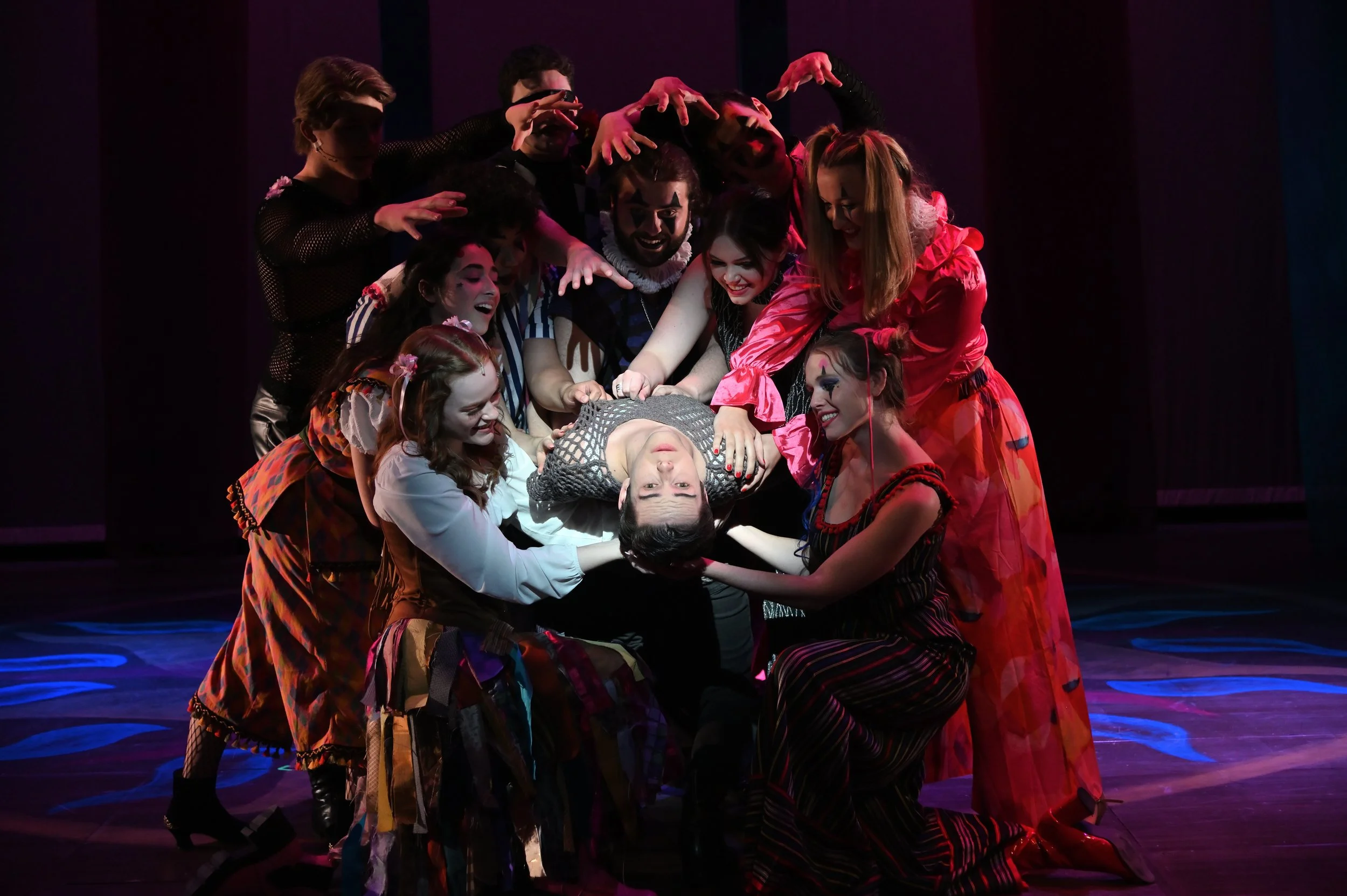
Photo by Mark Turek
One scene that I would like to discuss is the ending (spoiler alert!). At the conclusion of the production, Pippin refuses to follow the players’ demands of completing the “final act,” or taking his life. After he refuses, the players quickly and cleanly deconstruct the (beautifully designed/made!) set, revealing that they have been making the magic all along and that without them it is impossible to be remarkable. Although Pippin has been thinking mostly of himself and his accomplishments throughout the entire show, his refusal to follow the players’ demands and decision to stay ordinary uncovers the message which audience members are supposed to take away from the musical. Pippin, and the audience watching him, understand that one does not need accomplishments or to find a specific calling to be extraordinary. Instead, the most truly extraordinary act is finding joy and purpose in what some may consider to be an ordinary life. Achieving one specific dream or goal is not the key to happiness. The real key lays in finding joy in what we already have. The contrast between spectacle and blandness was startling, really driving the point home that wealth, excitement, and popularity do not denote the fulfillment Pippin seeks.
The importance of the ensemble in Pippin also resonated with me. When talking to the actors and directors, I learned that each ensemble member (and principal actor who was alternating with their understudy) was each assigned their own commedia character. The actors then made distinct choices which reflected their character. These choices added so much to the show and made it truly multi-dimensional. As the audience, we followed Pippin’s story but were made incredibly aware of the unique individuals which surrounded him. I think that the directors’ decision to add the commedia characters combined with the cast’s immense talent and hard work made the production truly “extraordinary” if that’s not too cheesy of a joke. :)